Your cart
Your cart is empty
Start with the essentials for training at home.
Best sellers
The pull-up bar is the foundation of calisthenics: pull-ups, muscle-ups, leg raises, front lever.
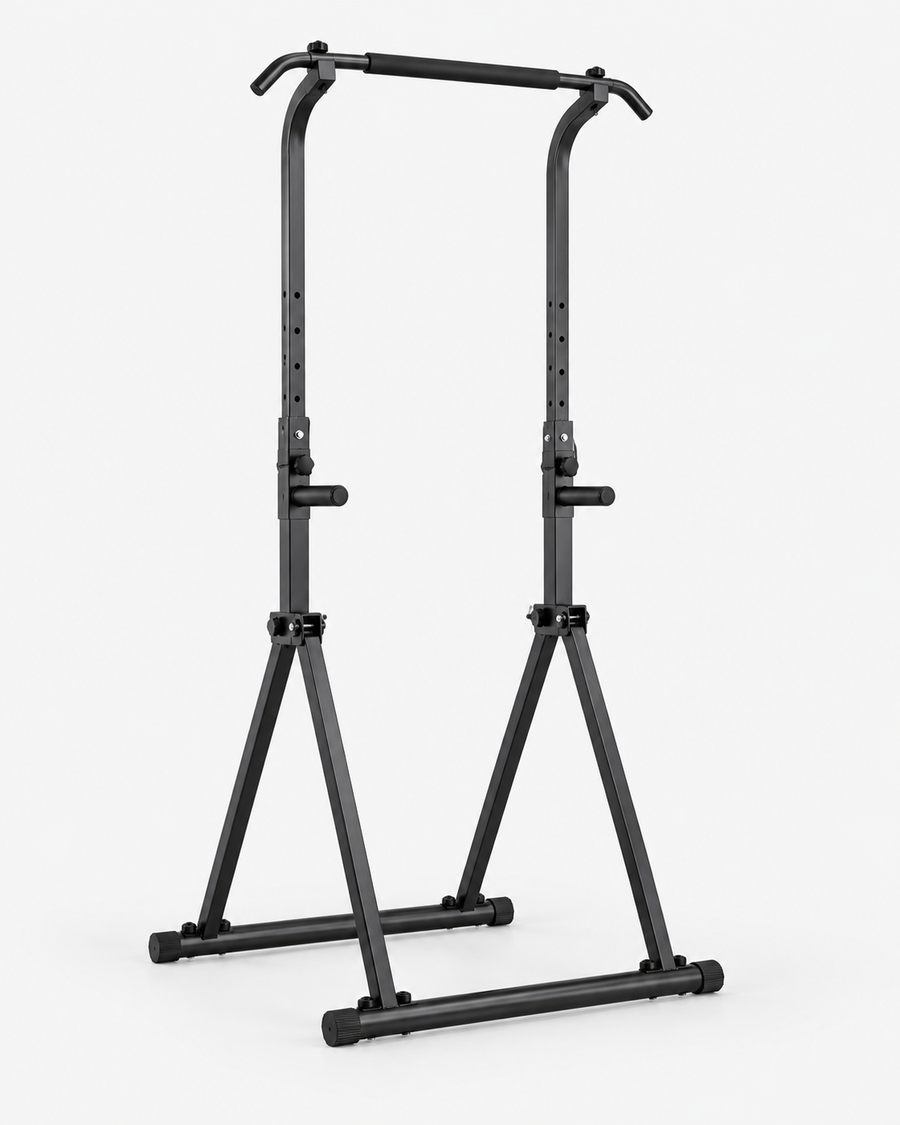

Dip Bars
Foldable Power Tower for Pull Ups and Dips
150 kg168 to 214 cm, 8 positions95 × 95 cm
118,90 €


Pull Up Bars
Multi Grip Door Pull Up Bar, No Drilling
On a standard door frame, no drillingWide, narrow, neutralThick steel tube
64,90 €


Pull Up Bars
Wall Mounted Pull Up Bar with Dip Station, 200 kg
200 kgThick-walled steel, black finishNon-slip textured foam
141,90 €


Pull Up Bars
Adjustable Door Pull Up Bar, 65 to 130 cm
65 to 100 cm or 90 to 130 cm depending on the model200 kgSteel tube
From 81,00 €


Pull Up Bars
Compact Telescopic Door Pull Up Bar, 60 to 100 cm
60 to 100 cm, adjustableBy pressure, no drillingSolid: solid wood, masonry or metal
39,90 €


Dip Bars
Adjustable Pull Up and Dip Station, 150 kg
150 kg165 to 219 cm, 10 positionsReinforced steel, 1.2 mm thick
121,90 €

Pull Up Bars
Neutral Grip Wall Mounted Pull Up Bar
Parallel (neutral) and angled ends (wide)Wall-mounted, solid load-bearing wallSteel
145,90 €


Pull Up Bars
Multi Grip Wall Mounted Pull Up Bar, 6 Handles
200 kg6, foamWide, standard, narrow
63,90 €


Pull Up Bars
Offset Wall Mounted Pull Up Bar with Brackets
Wall-mounted, 2 brackets, solid load-bearing wallWide, narrow, overhand, underhandSteel
196,90 €
A wall-mounted pull-up bar is screwed into the wall: it stays in place and takes up no floor space. A door pull-up bar is held in the door frame by pressure, with no drilling: it needs a solid frame. A free-standing pull-up bar stands on the floor, with no drilling. It needs more space, but you can move it, and fold it away if the model is foldable. Choose based on what your home allows.
A wall-mounted bar goes on a load-bearing wall made of concrete or solid brick. A plasterboard partition isn't suitable. Use wall plugs suited to your wall and check its condition before drilling. For a free-standing pull-up bar, you need a flat, stable floor.
A straight bar works for overhand and underhand pull-ups, and for the muscle-up. Parallel handles give a neutral grip, often easier at the start. A multi-grip bar or a bar with foam handles lets you change the width and angle of your hands from one session to the next.
Leave room above the bar to get your head over it, and in front to swing your legs. A bar held away from the wall by its brackets leaves your body more room. A free-standing pull-up bar takes up floor space: measure the room, ceiling height included, before you choose.
Buying guide
How to choose a pull-up bar: doorway, wall-mounted, ceiling or free-standing
Progression
First choose a bar that suits your home. If you can drill into a load-bearing wall, a multi-grip wall-mounted pull-up bar lets you vary your grip from the start. If you can't drill, a door pull-up bar is held in a solid door frame by pressure, and a free-standing pull-up bar does the same job on the floor. Add a resistance band if you can't do a full pull-up yet.
Yes, in two ways. A door pull-up bar is held in the door frame by pressure, with no screws or wall plugs: fit it in a solid frame (solid wood, masonry or metal), never on plasterboard or a hollow frame. A free-standing pull-up bar, such as the foldable power tower, stands on the floor: it does need space, though. The wall-mounted bars in this collection are all fixed with screws and wall plugs into a load-bearing wall.
Fit it high enough to hang with straight arms without your feet touching the floor, with bent legs if needed. Then keep enough space above the bar to get your head and chin over it without touching the ceiling. In a low room, do your pull-ups with bent legs rather than reducing that clearance.
A load-bearing wall made of concrete or solid brick. Avoid plasterboard partitions, and hollow bricks without suitable wall plugs. Locate electrical cables and pipes before drilling. If you're unsure what your wall is made of, ask a professional before installing.
Choose a wall-mounted bar if you mainly want to do pull-ups and you can drill: it's discreet and keeps the floor clear. Choose a power tower if you also want to do dips in the same spot, with no drilling. It takes up more space, but you can move it, and fold it away if it's foldable.
Overhand and underhand pull-ups, hanging knee and leg raises, and dead hangs for grip. With practice, the bar also works for the muscle-up and the front lever. Master the full pull-up before moving on to skills.
Message me and I'll reply personally.


